Concrete patio construction in Newport Beach CA - a patio that drains away from the house
Cracked, sinking or puddling patio? We dig out, pack a firm base and pour a new slab that sends water away from your house.
- Base dug and packed Soft dirt comes out so the slab doesn't settle later.
- Joints placed on purpose We cut joints so cracks follow lines we chose.
- Poured before the heat We pour early so the top cures hard, not dusty.
- Questions before the pour We ask how you'll use the patio before planning it.
- Fully licensed and insured.
- Free in-person estimates.
- Replies within 1 business day.
How do you know your patio needs replacing?
Most patio trouble starts underneath, with a soft base or water running the wrong way, and the longer it goes, the more of the slab ends up coming out.
Cracks that keep getting wider
A crack that keeps widening or breaks the slab into pieces usually means the ground under it moved. Patching hides it for a while, then it opens again.
One side sinking or tilting
When part of the patio drops, the base was usually raked flat instead of dug out and packed. The edge it leaves turns into a trip hazard.
Water pooling by the house
Puddles that sit against your wall mean the slab falls toward the house instead of away. Every rain sends that water toward your foundation.
A dusty, flaking top
If the surface powders under a broom or flakes off in patches, the top was likely poured in the heat or overworked, and it keeps wearing down.
Gaps at the house or steps
A gap opening between the patio and the house or steps means the slab has pulled away. Water and dirt work into it and the gap keeps growing.
Bare dirt where you want a patio
A patch of dirt or tired pavers outside the back door is where most new patios start. Planning the slope and finish now beats fixing a rushed slab later.
How we handle concrete patio construction
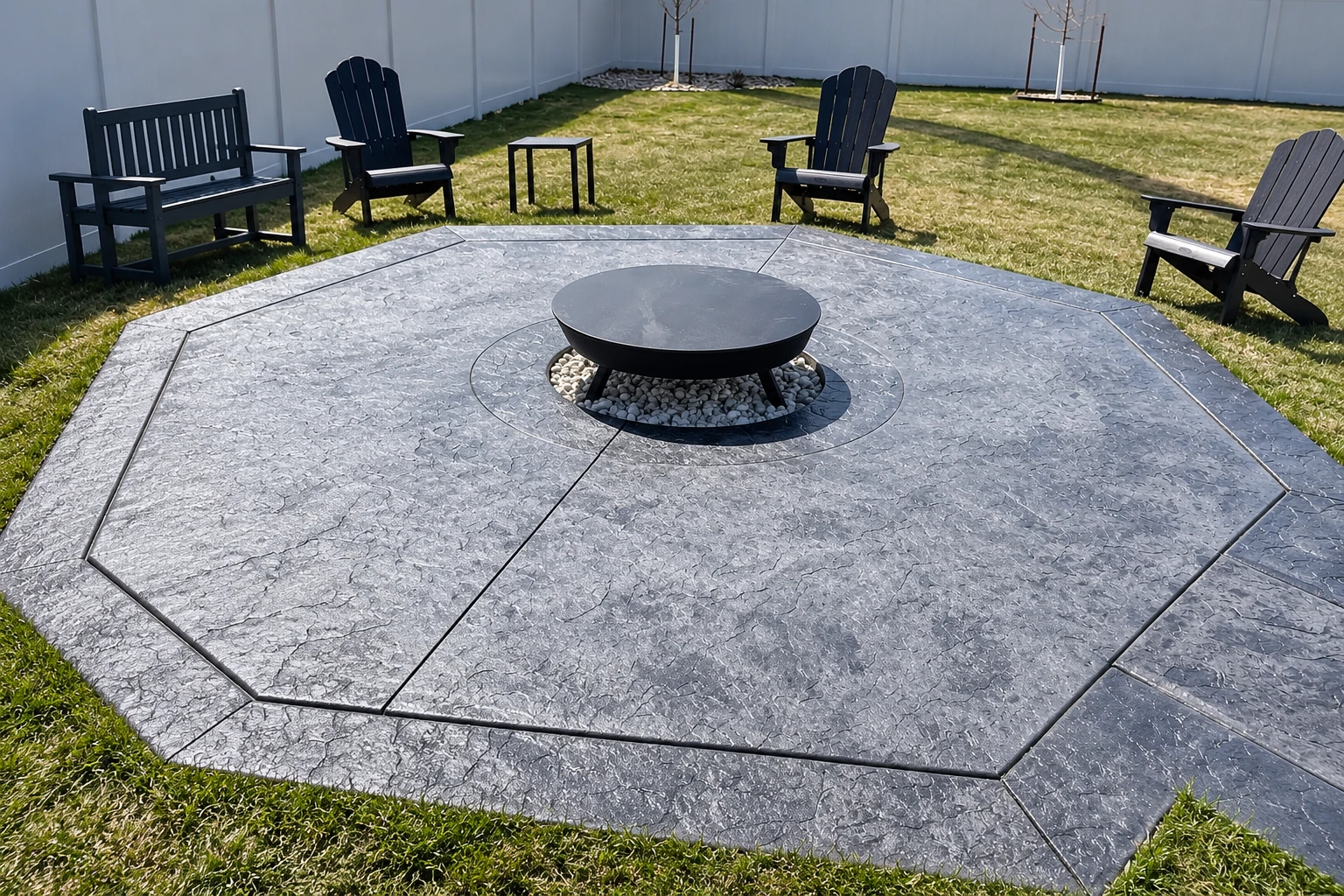
A concrete patio is flatwork, our word for slabs that sit flat on the ground, and a good one makes your yard nicer to look at and easier to live in. With a patio I start with the finish you want, exposed stone or stamped, then plan the slope away from the house and lay out the control joints, the cuts that give the slab a planned line to crack along, before anything gets poured. On the day, our crew digs out the soft dirt and packs the subgrade, the ground the slab sits on, sets the forms and the rebar, steel that helps hold the slab together, and pours early so the top cures hard instead of dusty. If the budget gets tight, I'll cut back the finish before I cut the base, because nobody sees the base on day one but everybody sees it settle later. Your price moves with the size, the finish, how much digging and drainage the yard needs and how easy it is to get concrete to the back, and the schedule turns mostly on what approvals your lot needs and the cure, the wait while the slab hardens before you use it. The written estimate puts your own numbers on all of that.
Plenty of patios tie into other work. If you want the slab pressed to look like slate, brick or stone, we plan it from the first visit as part of our stamped concrete services, and if you need a path from the driveway or side gate, we handle it through our concrete sidewalk building work so the levels and slopes line up.
What happens after you call about a Newport Beach patio?
Here's how a patio job runs, from the first call to walking the finished slab with you.
Call or send a message
Call (949) 691-0410 or use the form and we'll set a time to see the yard. A rough idea of the patio's size helps.
I measure and ask questions
I measure, check what's under and around the spot and ask how you'll use the patio. Then you get the estimate in writing.
We pull permits and pour
Once you're ready, we pull the permits for our part and book the city inspections. Our crew then preps the base, pours and finishes.
Walk the finished patio
We clean up and walk the finished patio with you so you can see the slope and the joints. After that it just needs its cure.
Why Newport Beach homeowners call Homestead Newport Beach Concrete
The owner plans your patio
I come out for every estimate and plan the job, including the sloped lots and tight side yards we see around here.

Our own crew and foreman
Our own crew does the work, led by a foreman I trained, so the job runs the way I planned it.
Building in Newport Beach since 2013
I learned under a boss who made me tear out anything I rushed and redo it, and we still work that way.
Licensed, insured, satisfaction guaranteed
We're fully licensed and insured, and our work is satisfaction guaranteed. Call (949) 691-0410 to set up a visit.
Get a written estimate for your new patio
Tell us the patio size, the finish you want and any soil notes from your buyer's disclosures. We reply within one business day to set up a free on-site estimate, with no pressure to book.
Patio finishes to look through
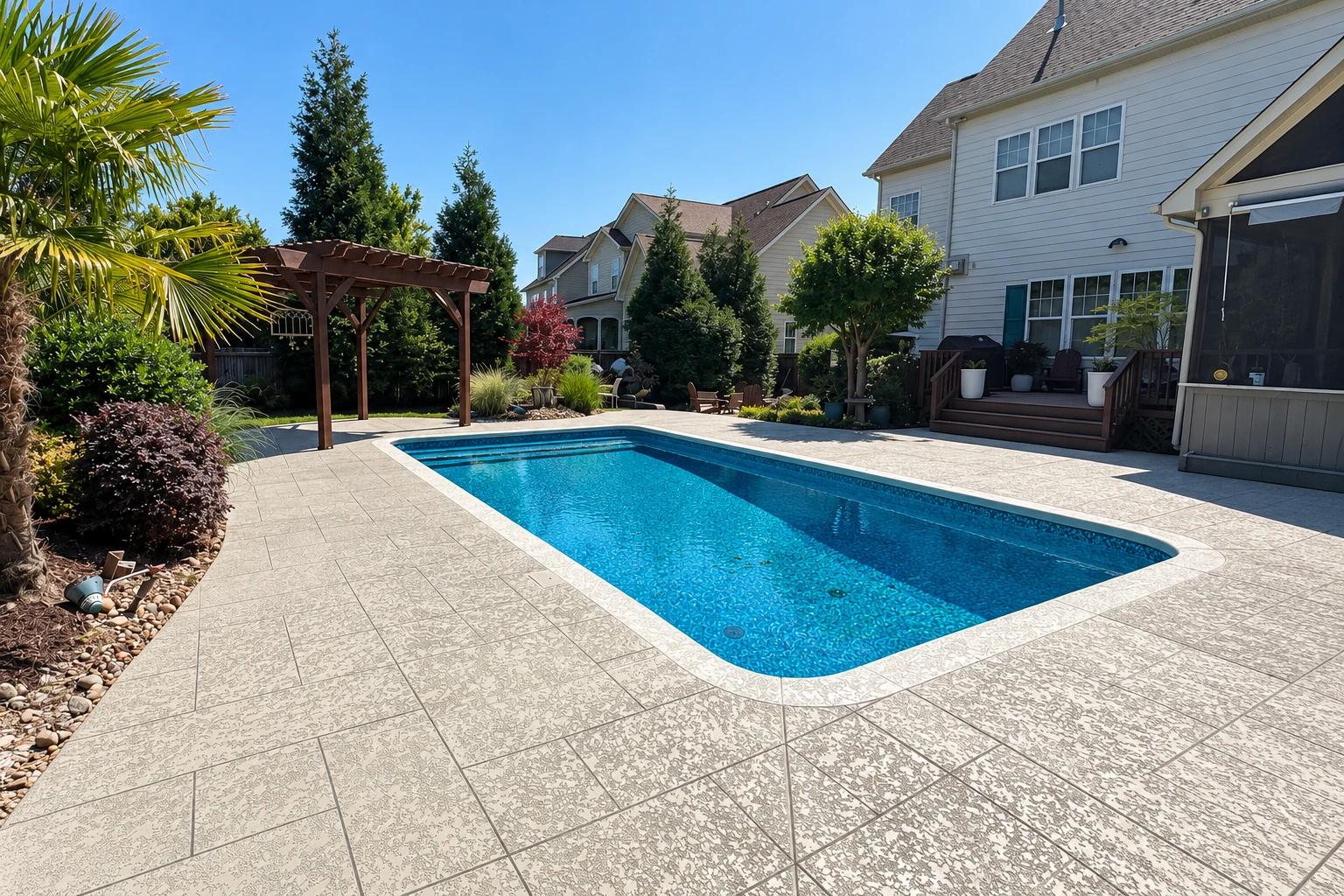
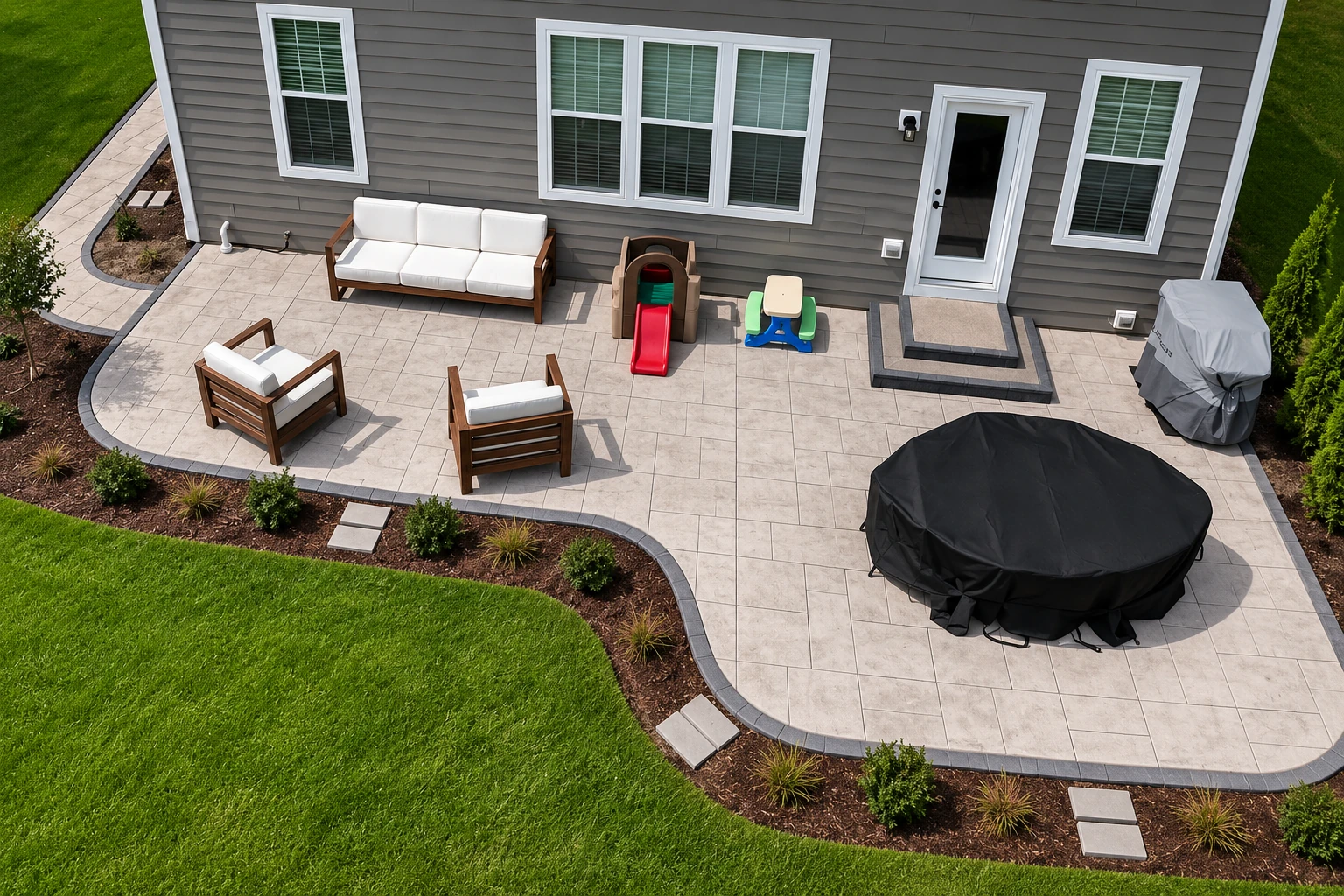
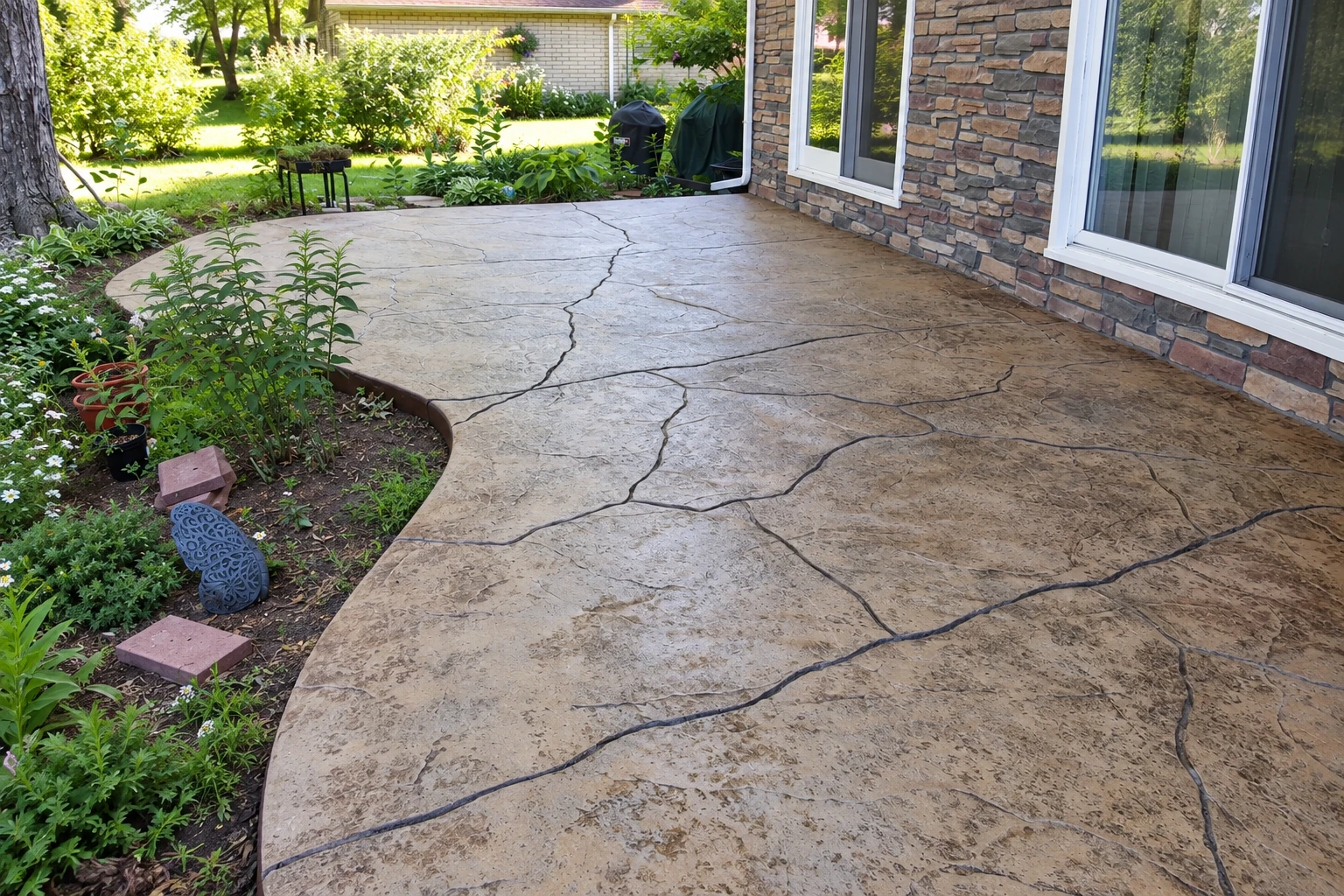
Browse these example patios, from exposed aggregate to stamped to a plain broom finish, the brushed texture that gives grip, and save the ones you like.
Patio questions we hear most
These are the questions Newport Beach homeowners ask us most about new patios. If yours isn't here, call and ask about your own yard.
How much does a concrete patio cost in Newport Beach?
A plain concrete slab or pad in Orange County usually costs about $7 to $14 per square foot, without staining or stamping. A stamped or exposed aggregate finish, a sloped yard, drains or a hard-to-reach backyard can move your price from there. I'll give you your own number in writing at the estimate.
What's the difference between exposed aggregate and stamped concrete for a patio?
Exposed aggregate has its top layer of cement paste washed off to show the stone underneath, while stamped concrete is pressed with mats while it's fresh to look like slate, brick or natural stone. One installation guide warns that solvent-based sealers give stamped concrete a rich, dark look but get dangerously slick when wet, and it advises mixing an anti-slip additive into the final coat. We'll talk through both at the estimate.
Will my new concrete patio crack?
Some cracking can't be prevented in any concrete, but properly designed joints control where it happens and keep it small. Statewide guidance also says expansive soils, ground that swells and shrinks with moisture, may lift and crack patio slabs, and you can find out whether your lot has them from your buyer's disclosures, the city's building department or a soil engineer. If yours does, I want to know before we plan the base.
How long before you can walk on a new concrete patio?
A new slab should be walkable within 48 hours, so light foot traffic can start soon after the work. Concrete keeps curing for about 28 to 30 days, and waiting a week before heavier loads like a grill, planters or a full furniture set is a safe choice.
What is the best way to slope a patio so water drains away from the house?
Federal building guidance says the part of a patio within 10 feet of the foundation should slope down and away from the house. Where a wall, a lot line or a hillside gets in the way, the plan adds a drain or a swale, a shallow channel that carries the water off. I check where the water runs on your lot before we set a single form.
Who can legally build a concrete patio in California?
In California, the license that covers forming, pouring, placing and finishing flat concrete is the C-8 concrete contractor license. Under a state licensing board rule, a landscaping contractor can also take on concrete work when it's part of a landscape project that improves the grounds around a house. Either way, ask which license a contractor holds before you sign.
Patios in Newport Beach and nearby
In Newport Beach, the city's Permit Center issues construction permits, and work in the coastal zone generally needs a coastal development permit before it starts, so we find out what your patio needs and pull the permits for our part before the pour. We're based here and work in the cities around it across Orange County, like Costa Mesa and Irvine, so pick your city below or give us a call.
Ready to plan your Newport Beach concrete patio?
We answer seven days a week, from 6 AM on weekdays and 8 AM on weekends, so call (949) 691-0410 or send the form.