Concrete retaining walls in Newport Beach CA - a wall that drains and holds your slope
Slope creeping onto the patio or an old wall leaning out? We build concrete walls that hold the soil and let the water out.
- Drainage planned first Gravel, pipe and where the water goes, settled before forming.
- Questions before the pour Extra questions up front, no guessing on the day of the pour.
- Poured or block, honestly You hear which one suits your yard, and why.
- Engineer when it's needed If a wall needs an engineer or another trade, I say so.
- Fully licensed and insured.
- Free in-person estimates.
- Replies within 1 business day.
How can you tell your slope needs a retaining wall?
A wall that's starting to move, or a slope that's starting to slide, is easier and cheaper to deal with now than after a wet winter brings it down.
Old wall leaning outward
The top of the wall tips toward you. That usually means water and soil are pushing harder than it was built for, and leaning walls rarely straighten back up.
Soil washing onto the patio
After a rain you're sweeping mud off the patio or the walk. The slope is moving a little at a time, and each storm takes more of it.
Cracks running through the wall
A crack that keeps widening is more than looks. It usually means the footing, the base the wall stands on, has moved, and fixing it costs more once it opens.
Water staying behind the wall
The wall stays wet for days, or the ground on top stays soggy. The drain behind it is clogged or was never there, so the pressure keeps building.
A slope you can't use
The yard drops off so you can't fit a patio, a play area or a path. A wall can turn that slope into flat ground you can actually use.
Timber or rock wall giving out
Old timbers rotting or stacked rock slumping. They held for a while, but once they start going, the soil behind them follows, usually into the yard below.
How we build a concrete retaining wall
On a wall, the drain behind it matters as much as the concrete, so before we form anything I work out where the water comes from, where the gravel and pipe go and where the water ends up. Then we dig out for the footing, tie in the rebar, the steel inside that helps the wall take the push of the soil, and form and pour the wall. We let it cure, the wait while concrete gains its strength, then lay in the drain and backfill in layers, packing it as we go. If the budget's tight, I'd rather you go plain on the face of the wall than cut corners on the footing and drain, because nobody sees those once it's done and they're what keep the wall standing straight. I'll also tell you straight whether poured concrete or block fits your yard better. What moves the price is the wall's height and length, the soil, how much drain work the slope needs and how easy the spot is to reach, and the schedule mostly turns on permits and that cure time. Your written estimate gives you the figure for your wall.
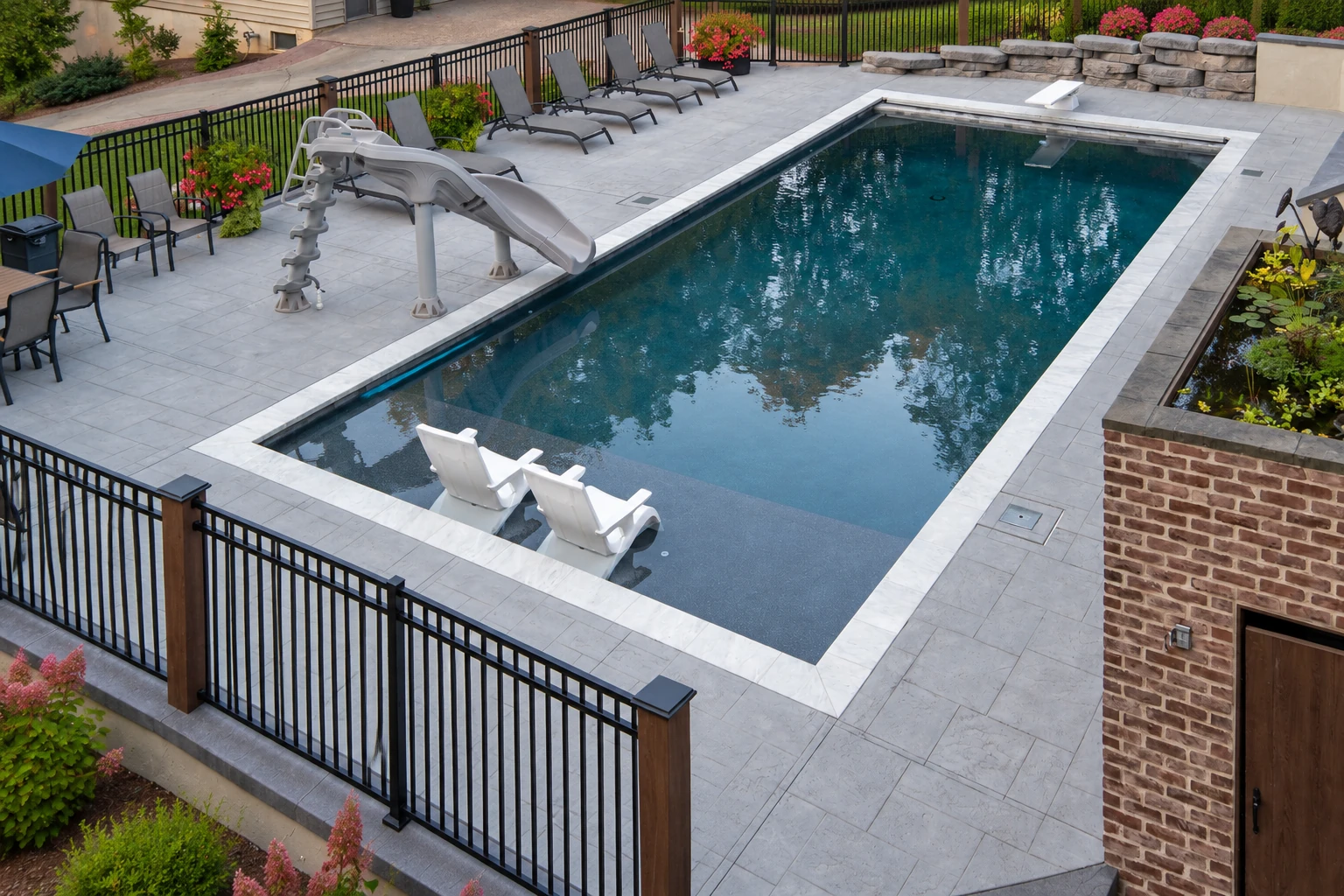
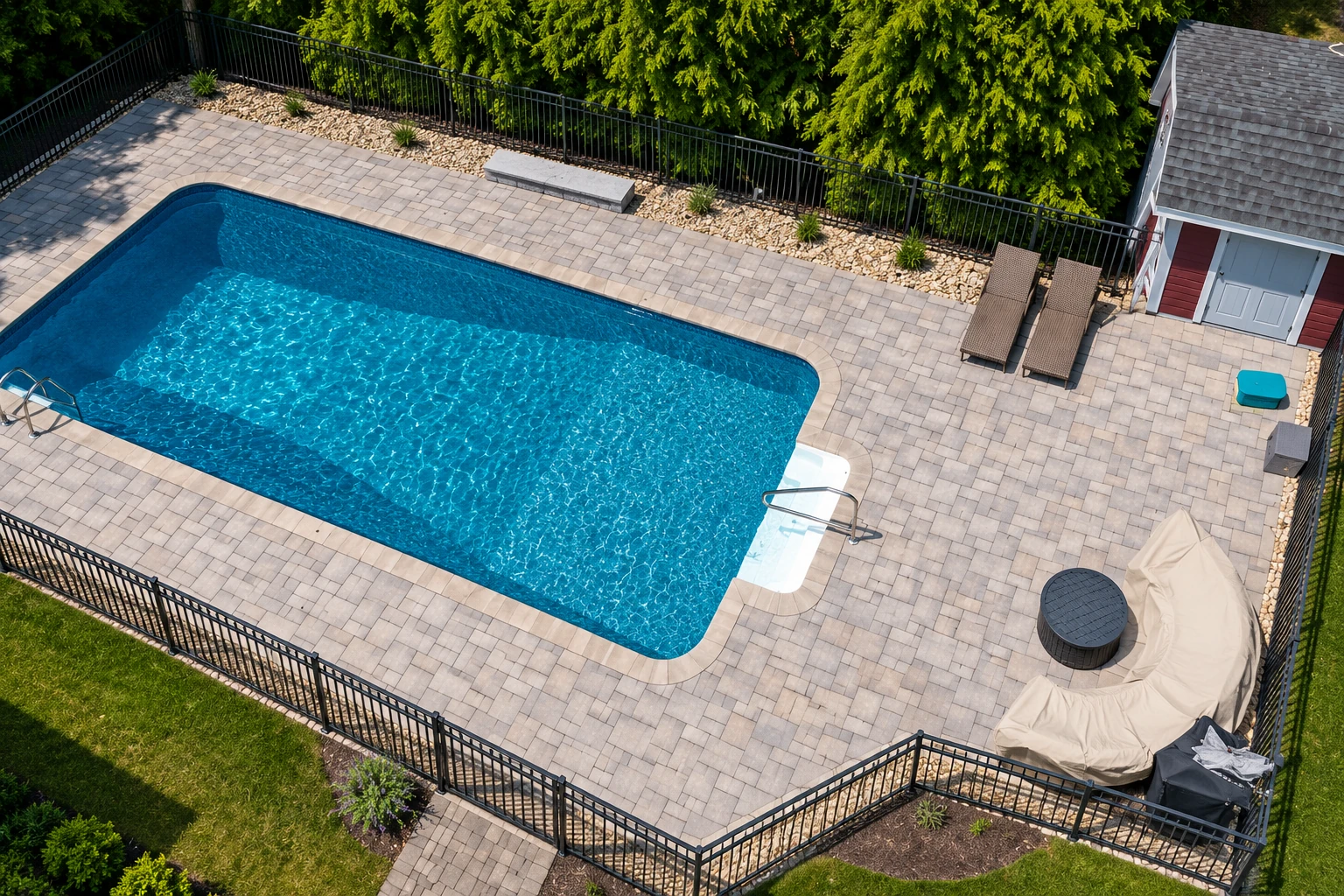
Once the slope is held back, the level ground it makes is usually where the next project goes. If that's a pool, we can pour concrete pool decks around it, and if you're putting a shed, a studio or a storage room on the new flat spot, our concrete floor installation gives it a proper slab to sit on.
What happens after you call about a retaining wall?
From your first call to the last walk-around, here's how a retaining wall job runs with us.
Call and set up a visit
You call or send a message, and we set a time. I come out myself to measure the slope and look at the soil.
Get a written estimate
I ask how you'll use the yard, then put the plan and price in writing, with my take on poured or block.
We build and drain it
Once you're ready and any permits are in place, our crew forms and pours the wall, then lays the gravel and pipe and backfills.
Walk the finished wall
We clean up and walk the finished wall with you. I'll show you where the drain comes out so you know what to keep clear.
Why Newport Beach homeowners call Homestead Newport Beach Concrete
The owner plans every wall
I come out for every estimate and plan the job, and a foreman I trained leads our own crew on it.
In business since 2013
I learned under an old-school boss who made me tear out anything I rushed, and we still build that way.
Licensed and insured in California
California licenses concrete contractors as their own trade, from forming to finishing. We're fully licensed and insured.
Slopes and tight side yards
Newport Beach has plenty of slopes and tight side yards, the jobs we like most. Call (949) 691-0410 to start yours.
Get a written estimate for your retaining wall
Send photos of the slope, the wall's length and height and your address, and we'll reply within one business day to set up my visit. The estimate is free, on-site and in writing, with no pressure to book.
Retaining walls and slope work
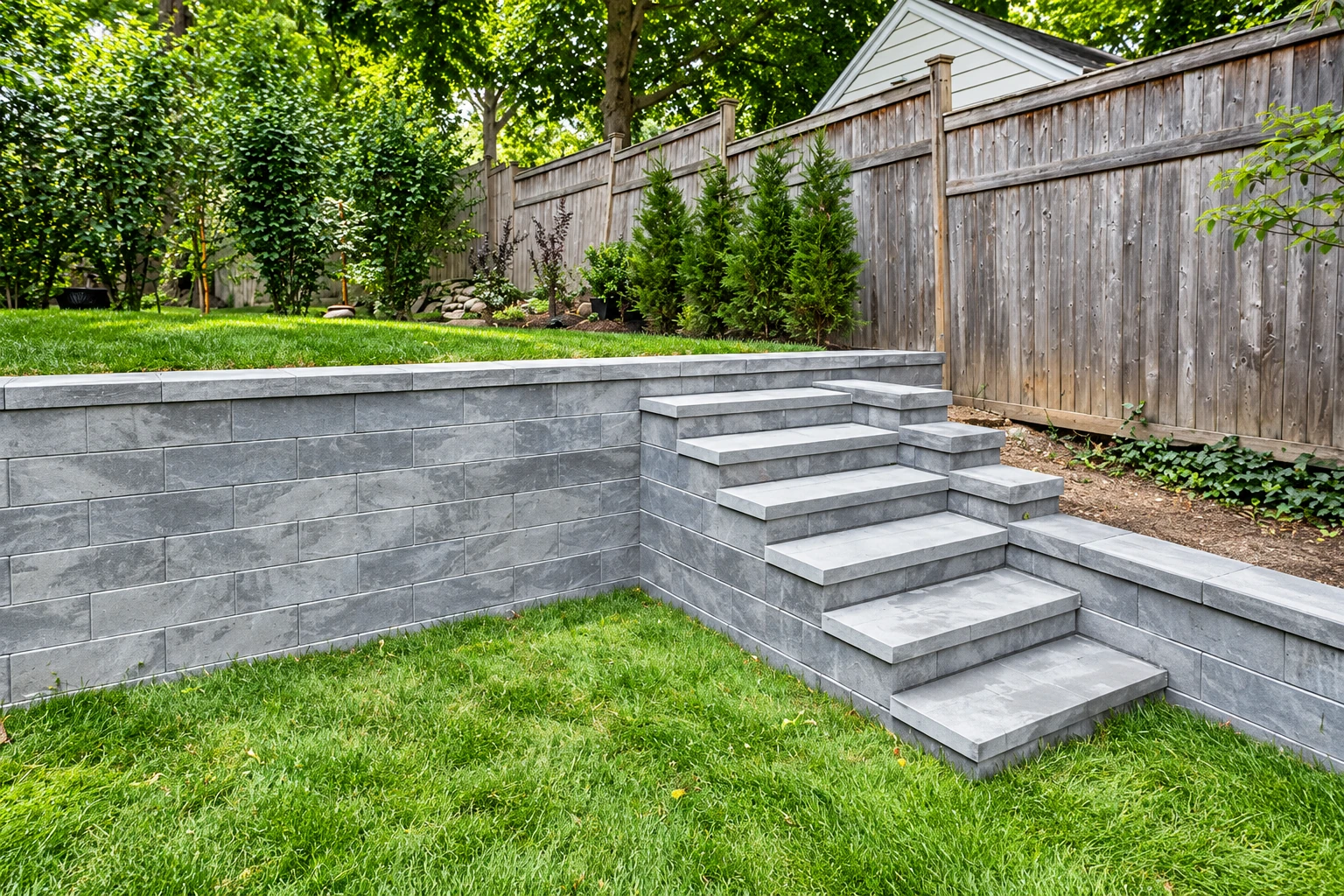
Scroll through these examples of concrete retaining walls and the level yards they make room for, and note the finishes you like.
Retaining wall questions we hear
These are the questions people ask me most at the estimate. If your slope or wall doesn't fit any of them, call or send photos and I'll take a look.
How much does a concrete retaining wall cost in Orange County?
A poured concrete retaining wall in Orange County usually costs about $35 to $50 per square foot of wall face, which is the going rate around here and not our own price. Soil can move that a lot, because a Wisconsin highway manual, written for road walls but useful background, says poured cantilever walls suit firm ground, and soft or settling ground can need piles, deep supports that add significantly to the cost. Your written estimate gives the figure for your yard, and our work is satisfaction guaranteed.
Why does drainage matter so much for a retaining wall?
Across the country, poor drainage is by far the most common reason retaining walls perform poorly. Even a moderate rise in water behind a wall sharply raises the sideways push on it and the risk of it tipping or sliding, so a gravel layer and a pipe at the base carry that water off, with filter fabric between the soil and the gravel so fine dirt doesn't clog it. Weep holes, the small openings low in a wall, are only a backup and can clog, so ask any builder what the main drain will be.
What is the best way to choose between block and poured concrete for a retaining wall?
Compare both for your own yard, because the right wall depends on the engineered design and the site, and neither one simply wins on strength. Block walls usually cost less to put in at the start. At the estimate we'll look at your slope, your soil and how you'll use the yard, and I'll tell you which one I'd build there and why.
Does Newport Beach issue permits for concrete retaining walls?
Yes, the city issues permits for masonry and concrete walls under its building policies. We find out what approvals your wall needs, pull the permits for our part of the work and book the city inspections. If an engineer or another office has to sign off first, we tell you early so it's part of the plan.
How long does a new retaining wall need before soil goes behind it?
It needs to gain enough strength, or be braced, before any soil goes behind it, according to a masonry trade group's guide for block walls. The same guide says heavy machines should stay back from the top of the wall by at least the wall's height while the backfill goes in. That wait is one reason a wall takes longer than the pour itself.
What should a retaining wall footing sit on?
A footing should sit on firm, undisturbed soil or on fill that's been well compacted, according to national masonry guidance. Loose dirt under a footing settles and the wall goes with it, so I look at what's under the spot before anything else gets planned.
Where we build retaining walls
Most of Newport Beach's land is in the coastal zone, so ask early whether your lot is. We also build across Orange County, including Costa Mesa and Irvine.
Get your retaining wall planned before the pour
We're open Monday to Friday from 6 AM to 10 PM and weekends from 8 AM to 10 PM, so call whenever it suits you.