Concrete steps construction in Newport Beach CA - even risers on a solid base
Steps cracked, sinking or pulling away from the house? We tell you if they can be saved, then build steps that sit even and solid.
- Patch or rebuild, straight We tell you plainly whether your old steps can be saved.
- Precast if it fits If a precast set suits your house better, we'll say so.
- Whole rise laid out Every riser gets measured out before a single form goes up.
- Water checked first We see where the rain runs before we set the steps.

- Fully licensed and insured.
- Free in-person estimates.
- Replies within 1 business day.
How do you know your concrete steps need work?
Steps get used every day, so small problems turn into trip spots fast. Here's what to look for before a patch job becomes a full rebuild.
Flaking on the treads
The top layer is peeling off in thin flakes. That usually starts at the surface, and catching it early usually keeps the fix small and simple.
Chipped step edges
The front edge of a step has broken off in chunks. It's a trip point every time someone walks down, and the chips get bigger with each knock.
Steps sinking or tilting
One side sits lower, or the whole set leans. That usually means the ground underneath has moved, and waiting lets the drop at the top keep growing.
A gap at the house
The steps have pulled away from the wall or the landing. Rain runs straight into that gap and keeps working on the dirt underneath, so it only gets wider.
A crack straight through
You can follow the crack down the face and across the tread. A crack like that runs through the step, not just the top, so it's worth a look soon.
Steps that catch your toe
One riser feels taller or shorter than the rest, so people trip. Uneven heights don't fix themselves, and they're a common reason old steps get rebuilt.
How we handle concrete steps construction
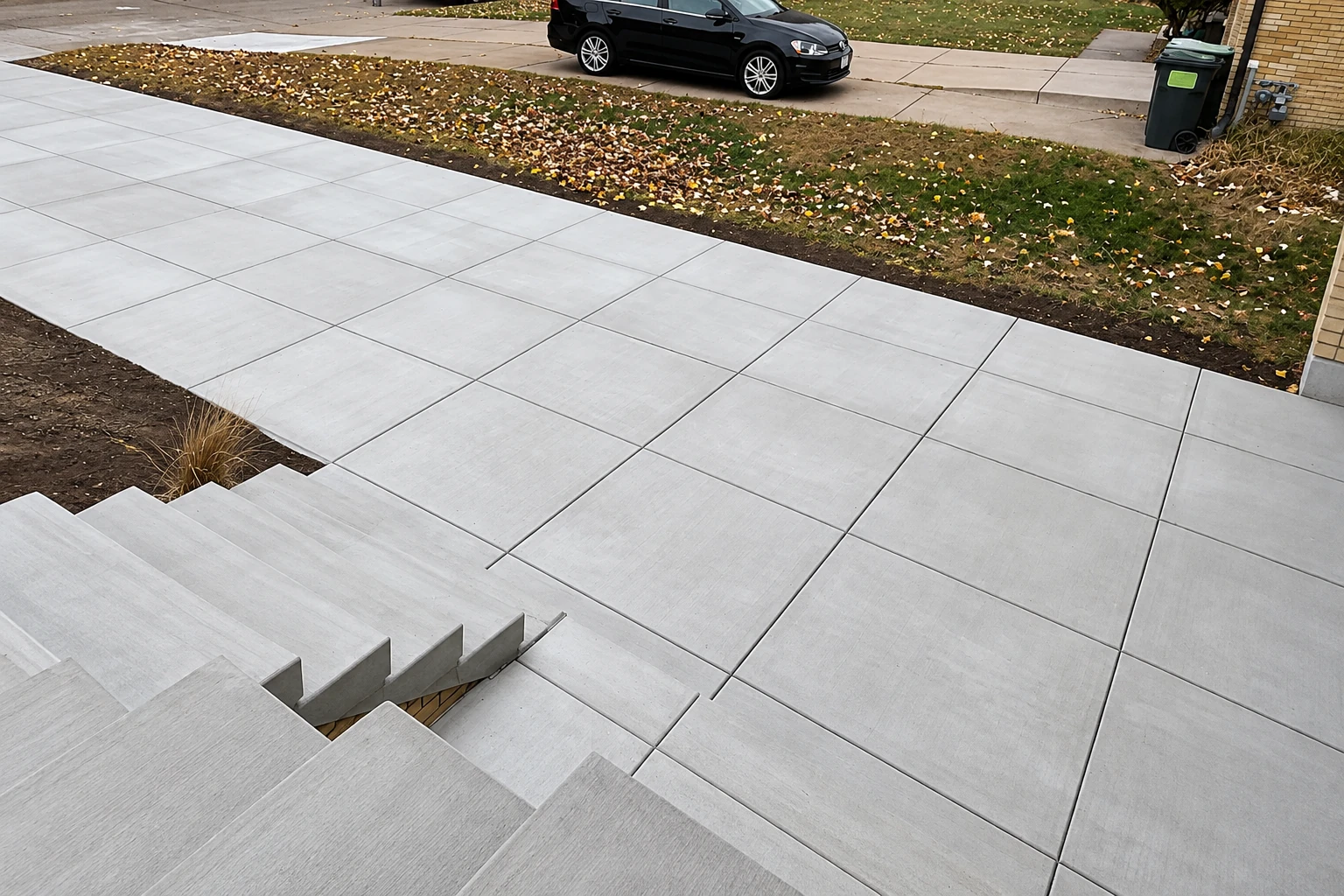
For concrete steps construction in Newport Beach, the first thing I figure out is whether your old steps can be patched or need to come out, and if a precast set makes more sense for your house, I'll tell you that too. Then we work out how the steps are held up, because steps can sit on the ground, tie into a landing or the house foundation, or span like a stair, and each one needs different rebar, the steel that holds the concrete together, and a different footing under it. Even a short decorative set needs more than loose fill, so we dig out and pack the subgrade, the ground the steps sit on, and check where rain will run so water drains off the treads and away from your door. If the budget's tight, I'd rather you skip a fancy finish than skimp on the base, because the base is the part you can't fix later without tearing everything out. Before any forms go up, we lay out the whole rise from the bottom step to the top, since a small miss on each riser adds up to one odd step that everybody trips on. We pour, give the treads a broom finish, a light texture so shoes grip when the steps are wet, and let the concrete cure, the wait while it gains strength, before anyone uses them. The price mostly comes down to how many steps you need, whether the old set has to be broken out and hauled away, what holds the new one up and whether precast fits, and the schedule turns on permits and curing, so you'll see your own number in the written estimate.
Steps usually tie into whatever they lead up to. When new steps connect to a new house or addition, they're planned with the foundation installation so they're supported the right way from the start, and when they climb to a new slab, we work them out alongside the slab foundation building so the top step lands right at the finished floor.
What happens when you call about concrete steps?
Here's how a steps job runs with us, from your first call to the day we walk the finished steps with you.
Call or send photos
Call (949) 691-0410 or use the form to set up a visit. Photos of any cracks or settling help me come ready.
Get a written estimate
I measure the rise, look at what's under and around the steps and ask how you use them. Then you get the estimate in writing.
We prep, pour and finish
Once permits for our part are lined up, our own crew, led by a foreman I trained, preps the base, pours and finishes the steps.
Walk the steps together
We clean up and walk the finished steps with you. I'll go over how to treat them while the concrete cures.
Why Newport Beach homeowners call Homestead Newport Beach Concrete
The owner at every estimate
I come out to every estimate and plan the job myself, so nobody prices your steps from a photo.
Old-school habits since 2013
I learned from a boss who made me tear out anything I rushed, and we've worked that way since 2013.
Licensed and insured, shown up front
We're fully licensed and insured, and I'll go over it with you at the estimate, before you sign anything.
Steel planned for salt
Salt from seawater and soil can rust the steel inside concrete, so near the water I ask about it before we set rebar.
Get a written estimate for your concrete steps
Tell us where the steps are, how many there are and what's wrong, plus photos of any cracks or settling. We reply within one business day to set up a free on-site estimate, with no pressure to book.
Examples of poured concrete steps
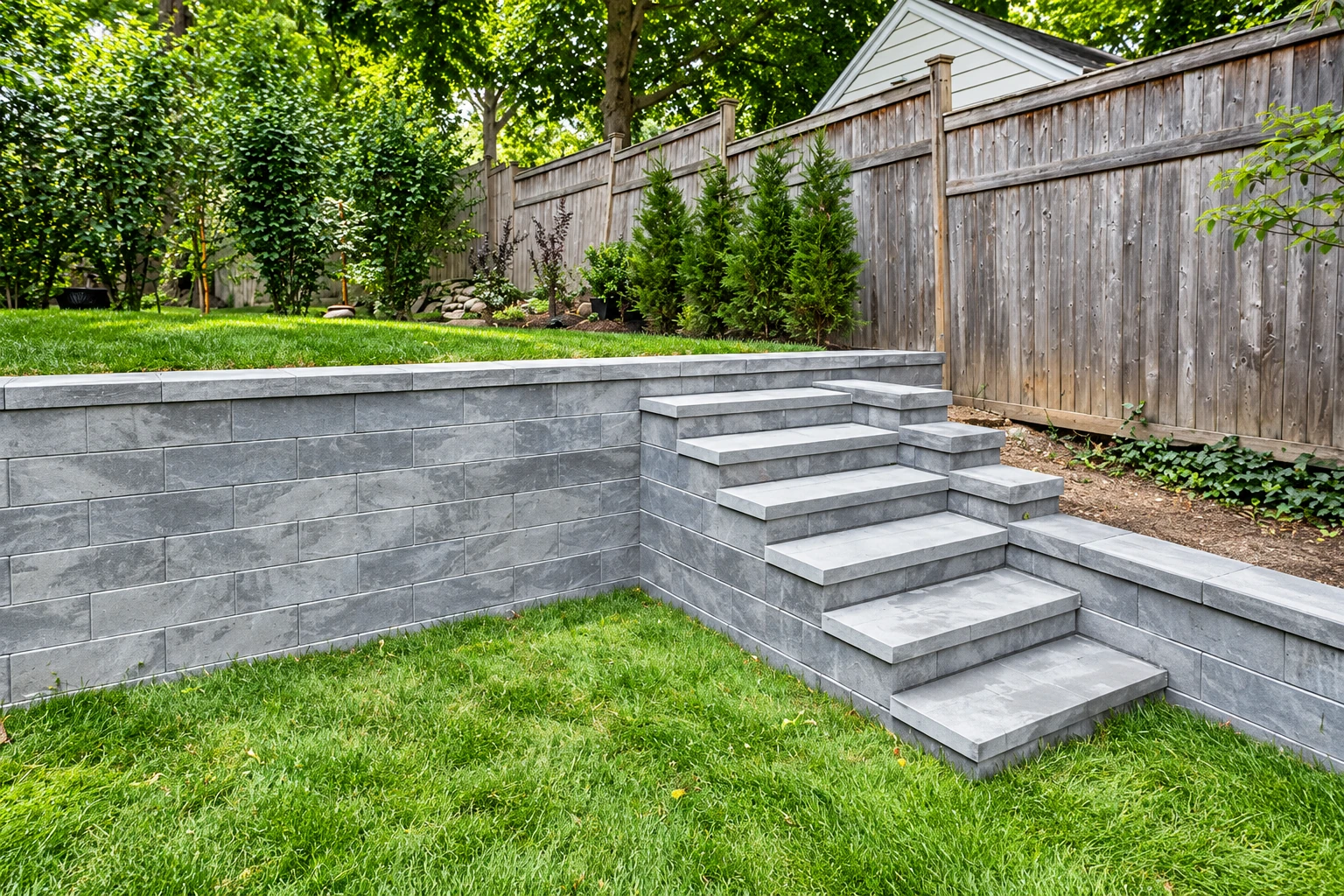
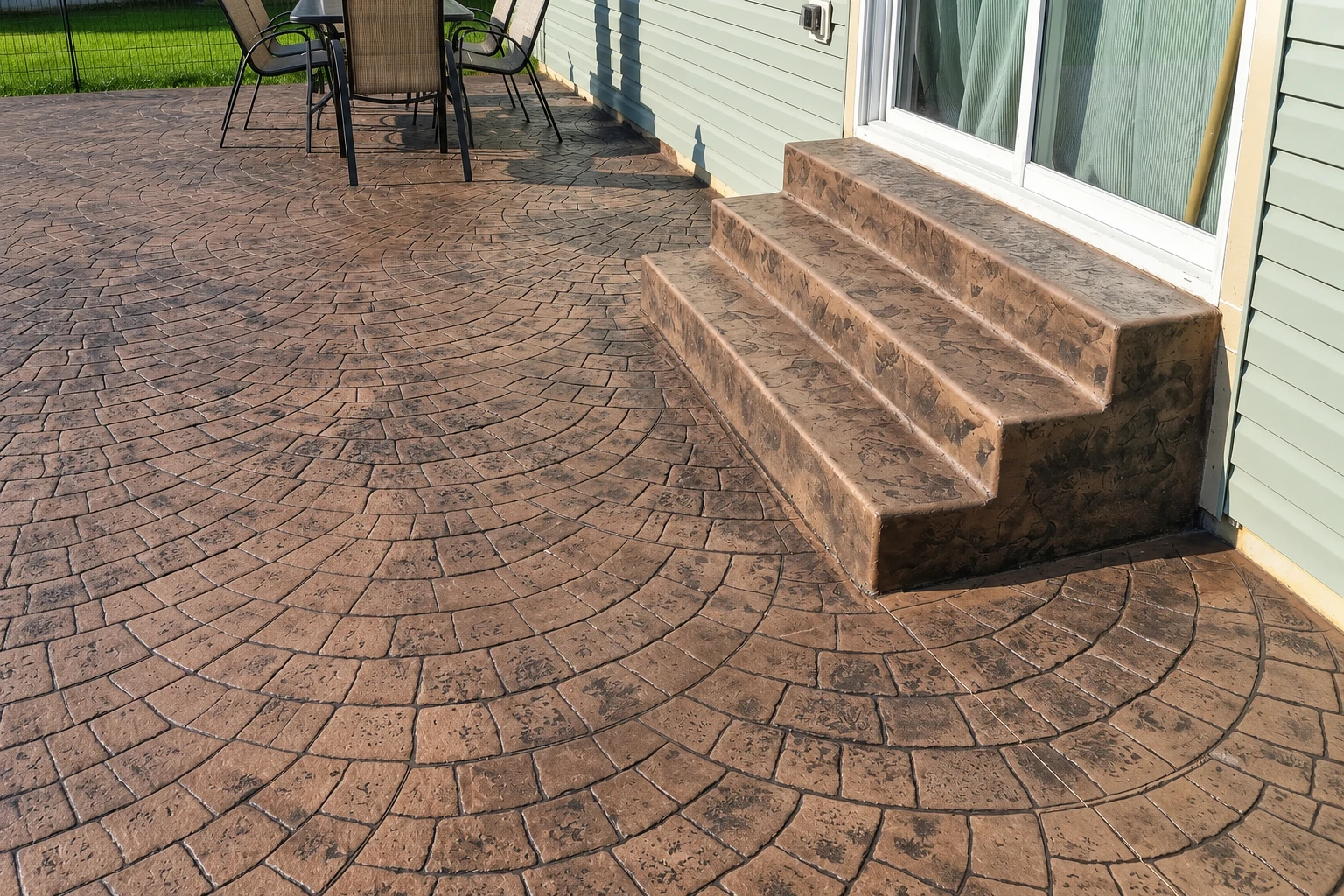
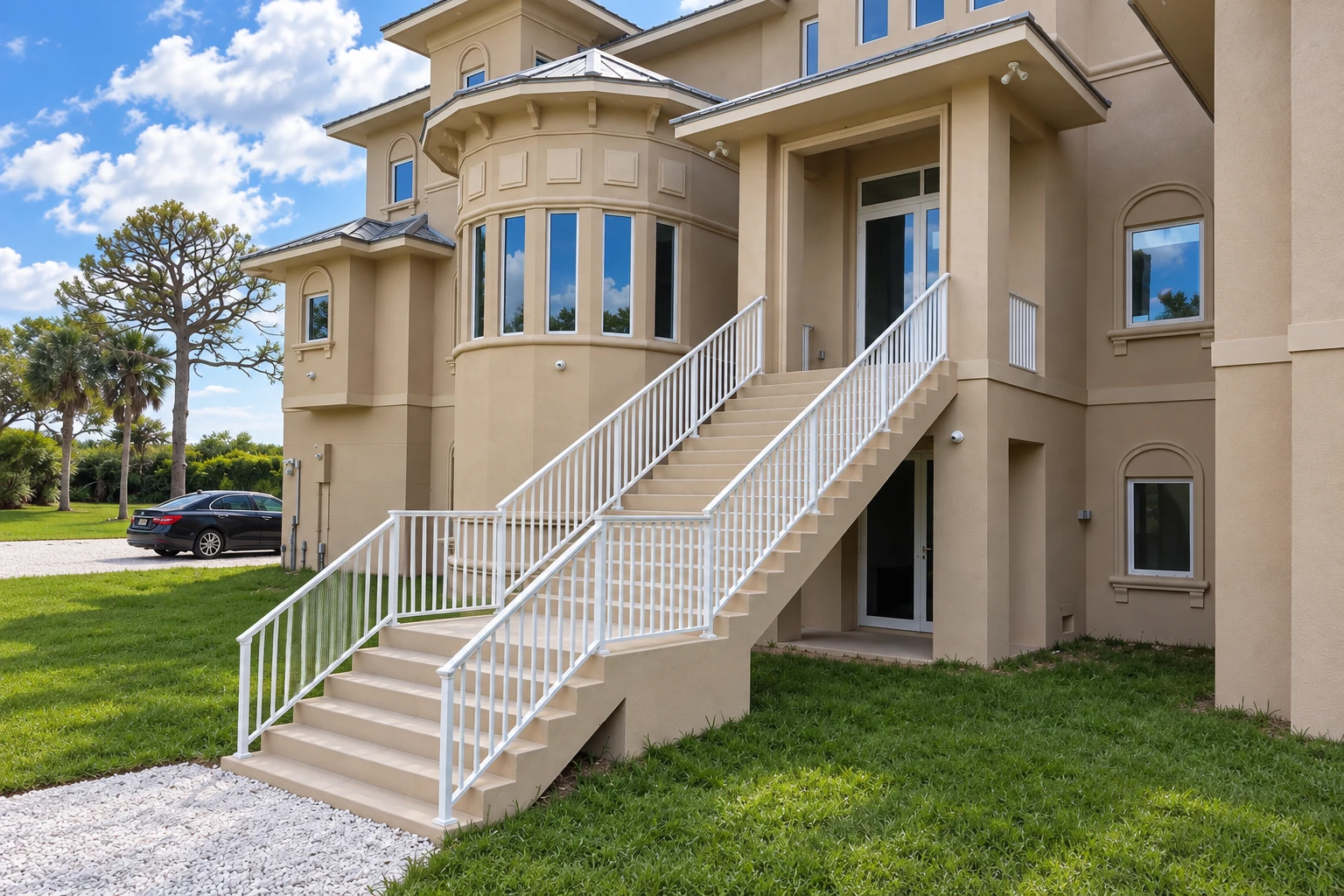
Look through these examples of concrete steps and landings to get a feel for the shapes, heights and finishes you might want at your house.
Questions about concrete steps
These are the questions people ask me most about concrete steps here. If yours isn't on the list, call or send a few photos and ask about your own steps.
How do I know if my cracked concrete steps can be repaired or need replacing?
Flaking, chipped edges and hairline cracks can usually be repaired as long as the base under the steps is sound. Steps that have settled, cracked all the way through or pulled away from the house are past repair, because a surface patch on a failed step just hides a fall waiting to happen. I'll tell you which one you've got at the estimate.
Are precast concrete steps a good choice in Newport Beach?
They can be, since precast sets are made off-site and cost significantly less per step than poured ones. They sit on top of the ground instead of a footing, and one national cost guide says a good set lasts 20 to 35 years in places without freezing winters, which describes the coast here. That guide also says they're trucked or craned into place in a few hours, but I'd still pour when the steps need a custom shape or have to tie into the house.
How much do concrete steps cost in Newport Beach?
Precast steps usually cost significantly less per step than poured ones, and for poured steps the price comes down to how many you need, whether the old set has to be broken out and what holds the new one up. A tight side yard or a tall rise to a raised door also adds work. You'll get your own number in writing after I've seen the steps.
Do I need a permit for new concrete steps in Newport Beach?
The city's Permit Center issues construction permits, but its list doesn't say whether concrete steps need one, so that's the place to ask, and we'll find out for your job. If your house is in the coastal zone, the California Coastal Commission says development there generally can't start until the Commission or the city issues a coastal development permit. The city also builds to the California Residential Code, which can set step height, tread depth and handrails. We pull the permits for our part and book the inspections, and if an engineer or another office has to sign off first, I'll tell you early.
What license should a concrete steps contractor have in California?
Look for a contractor licensed by the Contractors State License Board in its concrete class, which covers forming, pouring, placing and finishing concrete. A general builder can take on the concrete part if they hold that class or hire a licensed concrete contractor to do it, so if you're hiring a builder, ask which license covers the concrete work.
What causes concrete steps to sink or pull away from the house?
Most of the time it's what's underneath, because steps poured on loose fill settle as the dirt packs down, and water running under them washes the base away even faster. Steps that were never tied into a landing or given a proper footing can drift away from the house too. That's why I look at the base and the drainage before anything else.
Where we build concrete steps
We're based in Newport Beach and work in the cities around it across Orange County, like Costa Mesa and Irvine. Pick your city below or give us a call.
Get your concrete steps looked at
A loose or tilting step only gets harder to fix the longer people use it, so call (949) 691-0410 or send the form.